White Rabbit Gallery – Redux

THE Hungry Bon Vivant has had his home taken over by builders and as such was forced to find new temporary digs. I was fortunate enough to take over a mate’s warehouse conversion just around the corner from the White Rabbit Gallery in Sydney’s Chippendale and as such I have been able to spend some time viewing the new exhibition and tasting my way through the tea menu in the gallery’s excellent tea house with the young and up-and-coming tea connoisseur Miss Pla and her sister Miss Gob.

As a lover of Taiwanese Oolong I just had to try the intriguing named Jin Xuan (Milk Oolong) from Taiwan ($5). It was completely different from what I was expecting. The description on the menu described it as having a milky taste. Light straw in colour, it had an unusual, almost peachy aftertaste. It was quite pleasant and firm (but not strong) but was not like a traditional oolong which can be quite ‘herby’.

Tie Guan Yin (Iron Goddess of Mercy) Oolong ($4.50) is the type of oolong that I have come to love. Long lasting, firm tannin structures, deep and herbal with earthy/mineral traces. Top notch.

Another joy was the Mei Gui Oolong (rose oolong) ($5) another Taiwanese oolong with classic oolong flavours but again not as strong as the Iron Goddess of Mercy. It has traces of rose in its perfume and aftertaste but not as to detract from the tea itself. It is brewed in a clear glass tea pot so that you can admire the pretty pink rose buds bobbing about amongst the tea leaves while sipping on it. A nice introduction to Taiwan oolong.

The young Miss Gob and Miss Pla were intrigued by the Princess Flower Tea ($5). They watched with awe the unfolding of the tea buds into a blooming gardinia-like flower through the glass teapot. The tea comes as a tightly-wound ‘bulb’ that sinks and then gradually ‘blooms” with white jasmine floating to the top. The white tea leaves are bound together (so as not to separate and create a flower effect), and are wrapped around a red amaranth flower which gives the ‘flower’ a brilliant red centre. It’s a pleasant soft tea that is not too pungent and has a faint wildflower taste.

Finally, the Zhu Ye Qing (Bamboo Leaf) Green Tea ($5) – a rare find in any teahouse. Zhu Ye Qing was created in the early 1960s by a monk near the top of the sacred Buddhist mountain, Emei Shan (峨眉山) (which is now an UNESCO Cultural Heritage site in China’s Sichuan province). The tea is so named because the leaf has a similar shape to a bamboo leaf with both ends pointed. The leaf is slender and almost needle like and is actually quite attractive to look at (possibly why it is served in a glass tea pot). The tea itself may not be to everyone’s liking – the brew is light-green/straw in color with very grassy flavours (somewhat vegetative) with green tomato overtones. It is a tea that can hold up after many steepings.

The White Rabbit Gallery also has a new and exciting exhibition called A Decade of the Rabbit, which features the work of 30 artists mixing new works with viewer favourites from earlier shows.

Among the highlights:

  • He An’s illuminated-sign installation, which reflects on multiple meanings of love.
  • I Watch Myself Dying, Bingyi’s arresting record of her torment after being horribly burned.
  • Zhou Jie’s porcelain city, in which the buildings resemble organic growths.
  • A startlingly realistic street doorway, made by Gao Rong with nothing but fabric and thread.
  • The exquisite seascapes of Shi Zhinying.
  • The woven-wire “shadow” of a Jeep chassis, painstakingly (de)constructed by Shi Jindian.

If you live in my former town of Adelaide you are in luck as some of the White Rabbit Gallery’s collection of contemporary Chinese art will be shown from 15 July 2011 in the Anne and Gordon Samstag Museum of Art at the University of South Australia. The museum will be hosting a major exhibition of works from the White Rabbit Collection including Shi Jindian’s CJ750 motorbike, Sun Furong’s Nibbling-Up Series and Dong Yuan’s rooms made of paintings.

Also, if you are around the White Rabbit Gallery area on a weekday and want a coffee instead of tea go where Chippendale’s architects, artists and designers flock – the Little Queen Cafe. It’s a hole-in-the-wall, below-street-level cafe where you can sit at one of the long tables or benches (or on a milk crate on the street), and have a decent coffee. Try one of their delectable and fluffy home-made muffins (which change daily) for $4.50.

Read The Hungry Bon Vivant’s previous review on the White Rabbit Gallery’s Tea House here.

The verdict: Art meets tea culture. An excellent variety of teas to savour among modern and contemporary surroundings in one of Sydney’s hidden gems.

What: White Rabbit Gallery Teahouse, 30 Balfour Street, Chippendale NSW 2008 Australia. Phone (02) 8399-2867. Open Thursday to Sunday from 10am to 6pm.www.whiterabbitcollection.org/

Little Queen Cafe, 28-30 Queen Street, Chippendale, NSW, 2008 Australia. Open only on weekdays from 8am to 3pm.

Ate (and drank) there: 3, 9 and 10 April 2011

Posted in Adelaide, Chinese, New South Wales, South Australia, Taiwanese | Tagged , , , , , , , | Leave a comment

Phnom Penh Teo Chew Noodle House

“NUMBER 12?” asked the owner of Phnom Penh Teo Chew Noodle House during a busy lunch time rush. “How did she remember that?” I asked myself. I haven’t been to Dixon House Food Court for nearly two years and yet she still remembers me and what my usual is.

The Dixon House Food Court is in the basement of Dixon House in Sydney’s Chinatown and resembles the classic hawker food courts you would find buried throughout buildings in Asian cities. It’s noisy, full of people crammed on chairs and tables, and has some 18 individual tiny kitchens emitting a blend of smoke, oil and garlic which lingers in the air.

Phnom Penh Teo Chew Noodle House is a stayer. It has been dominant in “the survival of the fittest” Asian food court scene for around 10 years. Its name is deceiving – there aren’t any true Cambodian or Teo Chew dishes on the illuminated backlit picture menu which displays some 50 dishes (one dish however is named Phnom Penh noodle soup). The menu features basic soup, rice and braised and wok-fried dishes with variations on the combination of ingredients used – so a fish-ball soup can have noodles, pork and other extras added. Most meals start from $6. There is laksa (which is quite popular – from $8), and other dishes include sate chicken noodle soup ($6.50); braised seafood on rice ($8); chilli seafood on rice ($8); fish ball gow gee noodle soup ($7.50); and that food court favourite – special-fried rice ($6). With the noodle dishes you can choose from six varieties: thick egg; Hokkien; rice stick; mai funh vermicelli; for-funh vermicelli and thin egg.

‘Number 12’ is a dish I always have at Phnom Penh Teo Chew Noodle House. It’s the dumpling noodle soup with barbecued pork ($7.50) and I have it with the thick egg noodle.

It’s a substantial bowl. Chopped Chinese greens and coriander blend with chopped char-siu barbecued pork all floating above chewy thick egg noodles in a light chicken-style flavoured broth (which can be adjusted with the tray of condiments at the counter – try the sate chilli oil and dried chilli). There are four plump little wonton – basic and lightly seasoned with white pepper and wrapped in an egg wonton wrapper. In previous days there were usually five to six wonton but the lack of that extra wonton of by-gone days is well compensated by the almost mountainous serving of char-siu pork (and prices haven’t increased for the past few years so there seems to be a bit of give and take).

Delicious and filling, it’s a simple dish that is moreish and comforting.

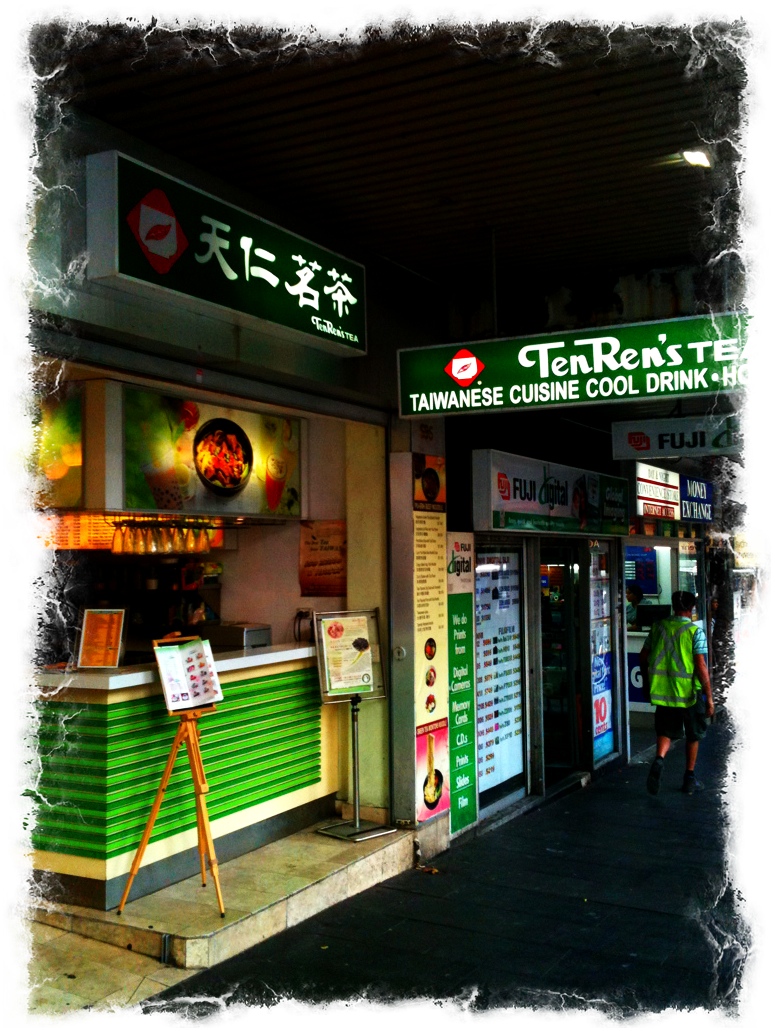
For a thirst quencher take a five-minute wander up to the corner of George and Goulburn streets where you will find one of two Sydney branches of Taiwan’s Ten Ren’s Tea which not only sells a large variety of Taiwanese tea leaves but also has a cafe (Cha for Tea) with a selection of Taiwan bubble fruit teas. Try the iced kumquat green tea ($4.50) as a takeaway. The other branch is in Chatswood.

The verdict: No frills. It’s the simple dishes that can be the most unforgiving if not executed well and when a simple stall can make a simple bowl of wonton noodle soup well – the result is spectacular.

What: Phnom Penh Teo Chew Noodle House, Stall B2 at Dixon House Food Court, cnr Hay and Dixon streets, Haymarket, Sydney, NSW Australia. The food court is open seven days a week from 10.30am to 8pm (but some outlets’ openings vary).

Ten Ren’s Tea, 696 George Street, Sydney, NSW Australia.

Ate (and drank) there: 25 March and 5 April 2011.

Posted in Chinese, Hawker food, New South Wales, Street Food, Sydney | Tagged , , , , , , , , | Leave a comment

Wasai Japanese Kitchen

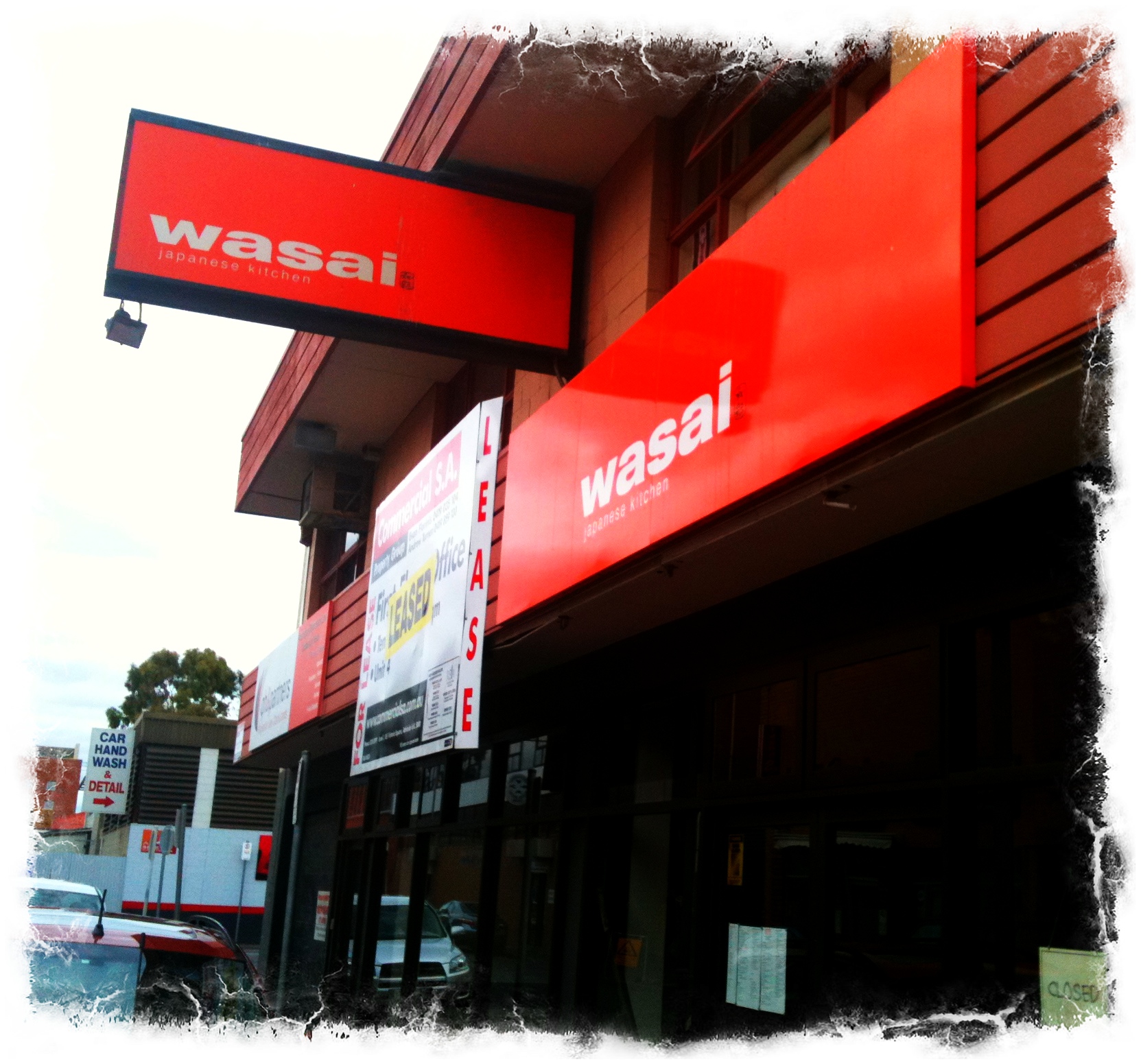
WASAI Japanese Kitchen is hidden in a narrow side street off Adelaide’s major eat street – Gouger Street – and if it wasn’t for friends taking me there one night I would never had known it existed (or the side street for that matter).

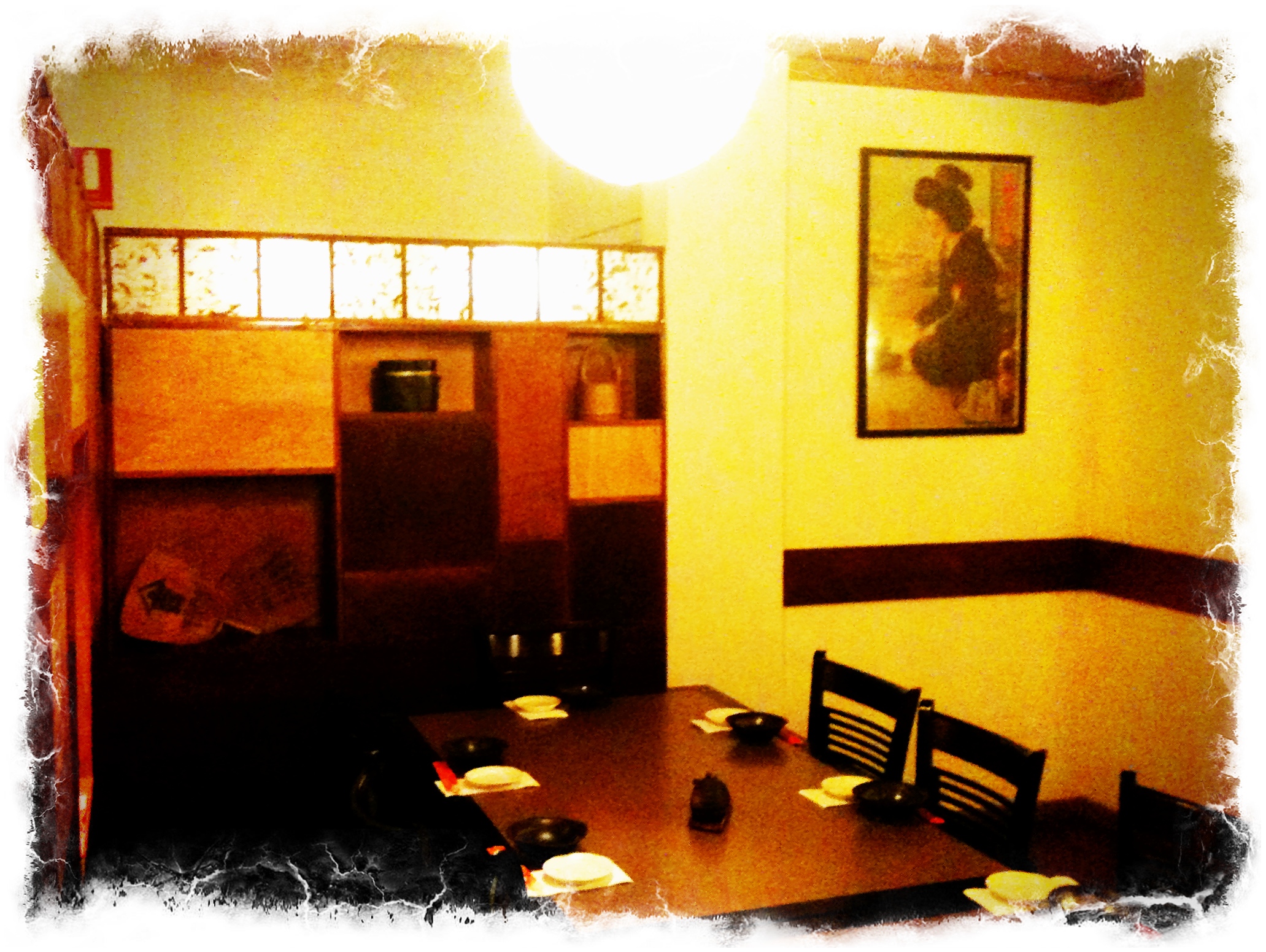
It is pretty non-descript from the outside but as you enter you are greeted by wooden floors, dark wooden tables and quite a smart-looking and deep space with walls adorned with retro Japanese beer girl posters advertising the likes of Asahi (very much in the same genre as those famous Chinese cigarette poster girls).

I’m here catching up with four old mates as I’m back in Adelaide and Wasai has been recommended by Ains and Bec – a couple of gals who love coming here together for the odd girlie catch-up before heading off to one of the refurbished and swanky bars that seem to be popping up around this area of the city.

As the menus come around a bowl of edamame (boiled soya beans in the shell), are placed on the table – gratis. At every Japanese restaurant I have been to edamame needs to be ordered – this is an impressive start to Wasai’s hospitality.

Wasai offers what seems to be a complete range of Japanese specialities with a couple of twists and innovations. Examples include different sorts of nigiri sushi and creative types of rolled sushi (with names like dynamite, dragon and spider). Then there are Japanese street staples like karrage (deep-fried chicken); gyoza (dumplings); tempura and soba noodles. Finally, meals such as hot pots, noodles and rice sets are available or there is a choice of banquets.

Ains and Bec want to take control. Tonight I am in their town, at their restaurant and on their time (but alas not on their money), so I leave the ordering to them. The gals are insistent that we order a variety of entrée-style dishes – gyoza, takoyaki and miso soup and then a deluxe sushi and sashimi boat. No arguments here – all of this is classic Japanese ‘pub’ food (known as izakaya food) and what that calls for is sake.

If there was one thing that was to strike me tonight it was Wasai’s sake menu. There are eight types served in either 120ml or 270ml flasks. The sake page details where each originates from but most importantly there is also an indicator of their sweetness/dryness level (by a numbering system – the higher the number the drier). The staff were exceptionally helpful in choosing and indicating the differences and their favourites. I chose the Hakkaaisan Jummai Ginjyou from Niigata ($12/$26) which was mid-rage in the dryness/sweetness scale and the most expensive on the list. It had a delicate perfume and a full-bodied slightly sweet flavour and dry finish and was to be the perfect accompaniment to what was to follow.

Miso soups can be hit or miss. Some restaurants use miso paste – others go the easy way out and use packet blends. This miso ($3) was flavoursome and creamy without that chalkiness that packet miso can have and had four slices of puffy fried tofu floating within.

The age-gyoza ($7) were four plump deep-fried dumplings stuffed with a combination of minced pork, cabbage and nira (garlic chives). The mixture seemed to be seasoned with soy sauce, rice vinegar and sesame oil. They were not oily, slightly crisp and perfectly seasoned.

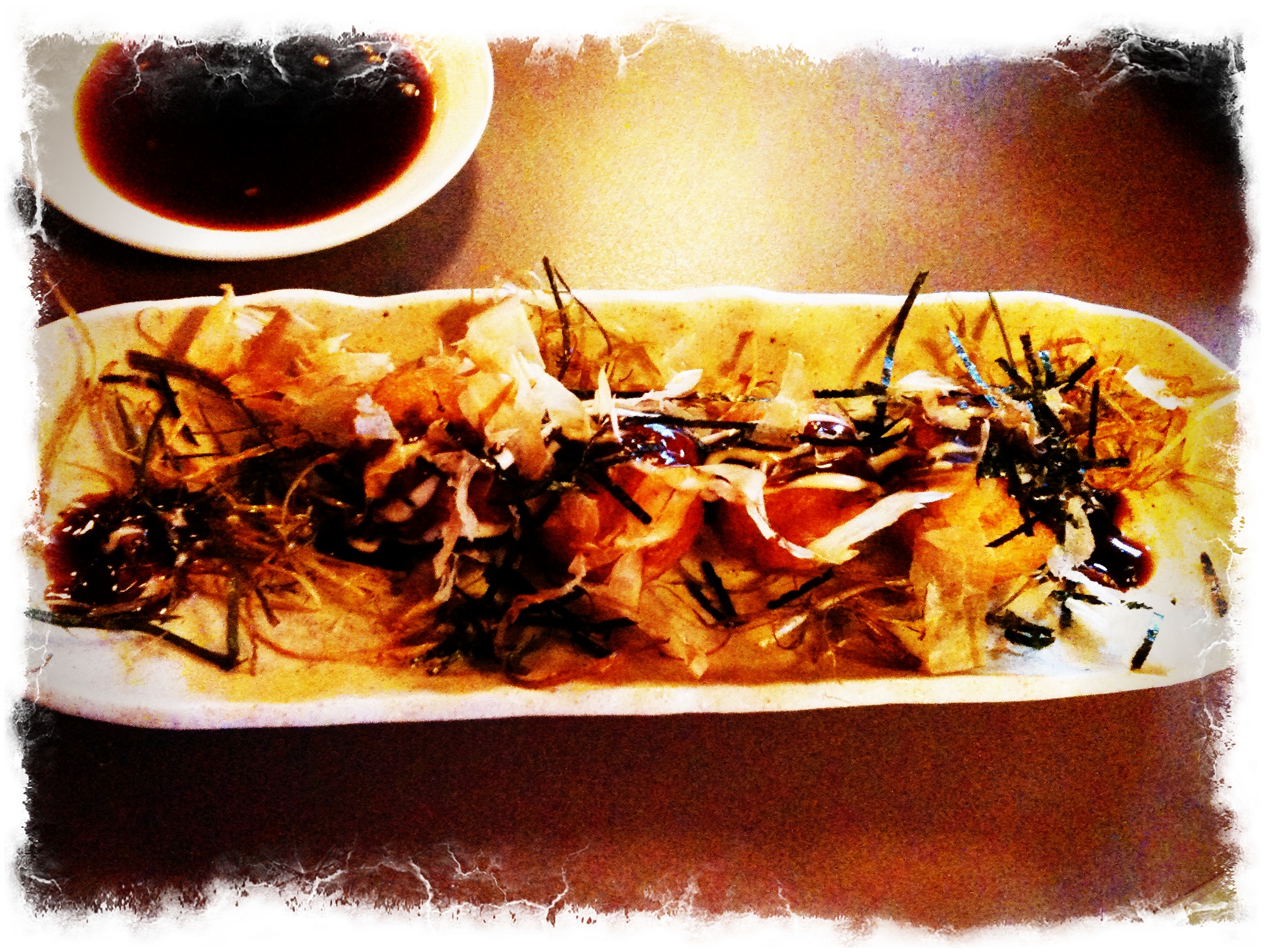
The takoyaki ($7.50) are basically an octopus and vegetable dough-like ball that is then lightly fried. Wasai’s are presented on a long ceramic rectangular plate. Eight golden spheres are perfectly lined in a row and are dressed with a zig-zag of rich okonomiyaki barbecue sauce and topped with nori slithers and katsuobushi (benito flakes) that seem to slither and sway on top. These are as traditional as you can get – it is rare to have takoyaki with such typical toppings in Australia (where they’re usually sold on a stick). They have a delicate batter and a soft inner centre of mashed vegetables (green onion and ginger with a piece of octopus in the centre and a crisp golden crust). They have a wonderful sweet/savoury combination with the toppings providing some added ‘oomph’ and richness to these little snack balls made famous in Osaka.

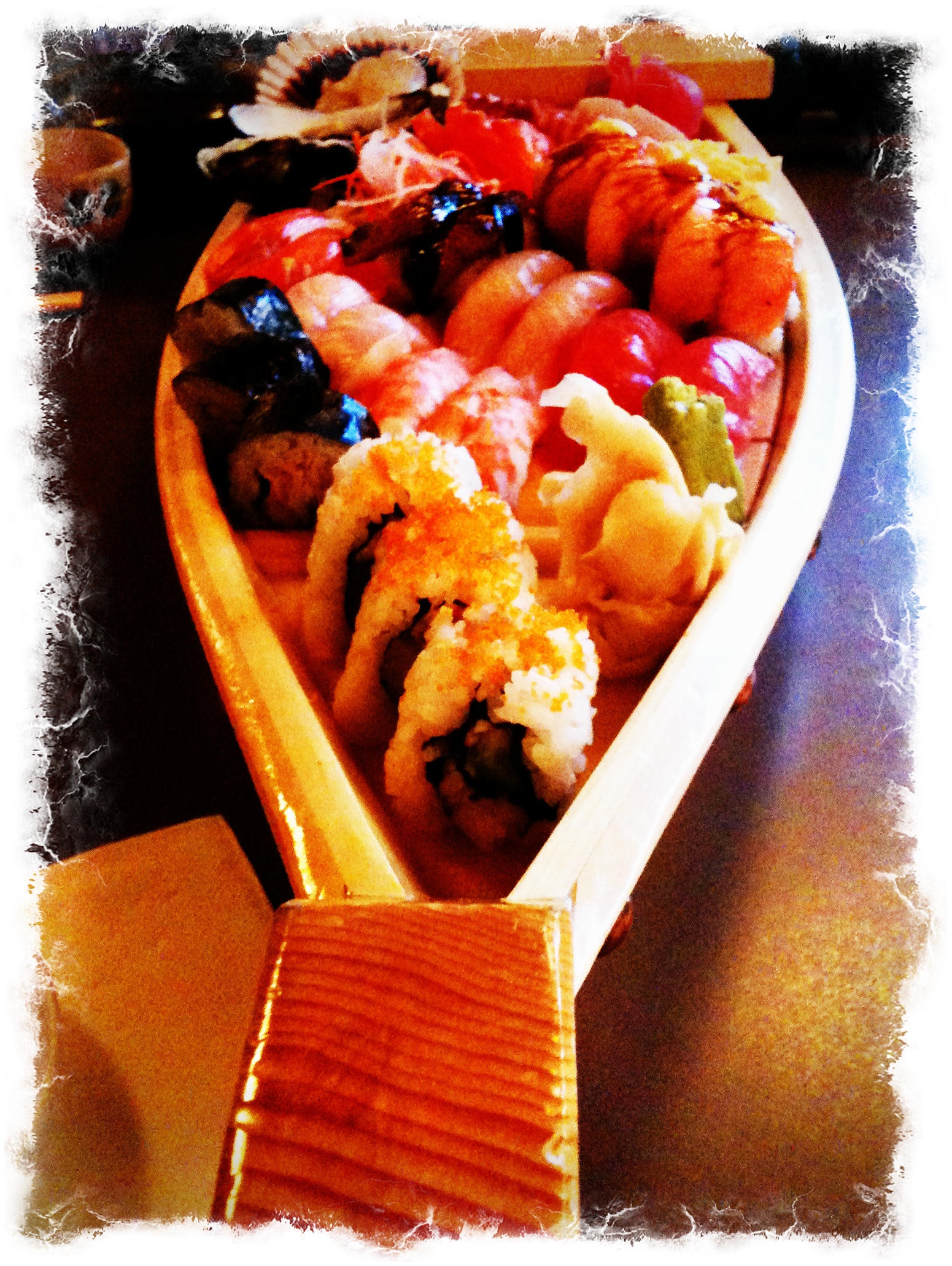
Eyes widened when the deluxe sushi and sashimi boat ($54) overcrowded with colourful pieces of nigiri sushi, sushi rolls, and a variety of sashimi including scallop, oysters, tuna, salmon and kingfish, docked. The sushi was well prepared with a nice balance of tender rice and vinegar and the sashimi certainly fresh and well cut. The array and amount on the boat was impressive.

The lads, not content with the wonderful examples of ‘pub food’ and the excellent boat, decided to peruse the chef’s specials (five to choose from). The specials were a ramen; salmon belly sashimi; a salmon roll; salmon karaage and mango sorbet. As I’m a ramen fan I couldn’t resist ordering the jigoku ramen ($11.80) which was a spicy ramen with pork, onion and coriander. Unfortunately it didn’t live up to my expectations. The broth, although slightly chilli flavoured, was rather bland and watery without any body, the noodles were gluggy and over cooked and the pork were just strips of thinly cut fillet (the type that would be in a phở. Maybe the chef was now out of the kitchen as it was a let down to the other dishes we had during the evening.

After dinner, true to form, Ains and Bec dragged us out to one of those done-up pubs (thankfully The Hotel Metropolitan with a pleasant mix of drinkers), where I discovered the excellent The Hills Cider Company cider on tap (made from Adelaide Hills apples). Unlike most ciders that can be too dry and lack any flavour (or too sweet), this one is crisp and dry with lasting slight poached and baked apple flavours lingering on the palate. A case of it followed me home back to Sydney a couple of weeks later.

The verdict: A casual, friendly and appealing restaurant with an excellent and well-priced variety of Japanese staples with a few creative touches on the menu. Despite one little let down, Wasai offers a nice distraction to the fast and fluid Gouger Street restaurant artery.

What: Wasai Japanese Kitchen, 9/15 Field Street, Adelaide, South Australia 5000. Phone (08) 8221-6606. Open: Dinner only on Monday to Saturday from 6pm. Web: http://www.wasai.com.au

The Hotel Metropolitan, 46 Grote Street, Adelaide, South Australia 5000.

The Hills Cider Company: www.thehillscidercompany.com.au

Ate there: 12 February 2011.

Posted in Adelaide, Japanese, South Australia | Tagged , , , , | 2 Comments